The playbook
How it was made
The pilot of Friday Morning Funeral is 21 minutes 38 seconds of felt-puppet sketches. It went through seven cuts in five days, 10 to 15 November 2026, and the pictures cost $116.52. This page is the method, the bill, and what we got wrong. Where a number was never recorded, it says so.
The model-by-model results are on the benchmark page.
The method in six rules
- Our drawings are the show. Every picture is drawn first by an image model in the one felt style, checked by eye, and approved. Nothing made by code or modelled in 3D made it into the show.
- Every generated clip starts and ends on one of our drawings. A model fills the movement between two pictures we own. It never decides where a shot ends.
- Mouths and blinks are drawn by us, timed from the words of the line. No model touches a talking face.
- A still is fine; a hallucination is not. A clip that adds a light, a hand, a leaf or a person is thrown out and the shot falls back to the drawing.
- Lettering never goes through a video model. Signs, logos, screens and titles are stills or our own graphics.
- Sound first. The script is voiced, checked word for word and timed before a picture is cut to it.
The steps, in brief
| # | Step | What happens |
|---|---|---|
| 1 | Notes | Aram watches the last cut and dictates a voice memo by timecode. His memos ran 11 to 97 minutes. |
| 2 | Transcribe | The memo is transcribed (about 45 seconds for an hour of memo) and turned into a numbered edit list, one note per change. |
| 3 | Check facts | Any new claim about a real person or company is looked up and the sources written down before the joke is touched. |
| 4 | Script | The sound script is edited: who speaks, the line with its delivery, the gap, the audience reaction, effects, music beds. |
| 5 | Build the sound | Every line is voiced and timed. Only changed lines are made again. |
| 6 | Check every line | Each voiced line is transcribed back and compared with the script. |
| 7 | Draw | New drawings at about $0.04 each: a base picture per camera position, then every pose, mouth and blink as an edit of that base. |
| 8 | Look at every drawing | A contact sheet, checked for hands, clothes, props, the flower in frame, lettering, and against the neighbouring drawing. |
| 9 | Move | Clips are generated between two approved drawings, two jobs at a time. |
| 10 | Vet the clips | A tool drops anything brighter or more coloured than the drawing; then a person looks at a frame sheet. |
| 11 | Sequence and render | Each sketch is sequenced against the sound and rendered, at about three times real time at 1080p. |
| 12 | Assemble | The segments are joined, with one loudness pass. |
| 13 | Check and deliver | A contact sheet across the whole cut, then a new file to Aram with a list of what was done, what was not, and what nobody has checked by ear. |
Turnaround from notes to the next cut: about 14.5 hours for the biggest rebuild, 2.5 and 4.5 hours for the last two rounds.
How the style stays consistent
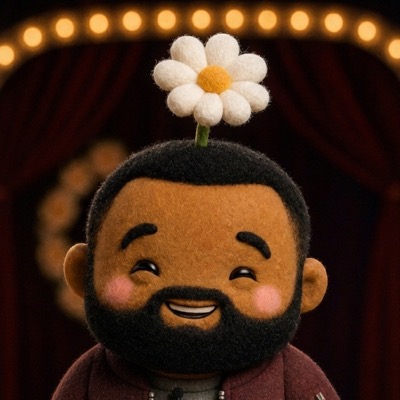
- One style, one mark. Soft needle-felt puppets, bead eyes, no noses, a daisy on every head. One reference picture and one sentence give a new on-style character.
- One character per drawing. Line-ups drift.
- A set-up is a folder. A base picture drawn in its scene, then every pose, mouth and blink as an edit of that base ("reproduce this exact image, change only…"). The animator finds what changed and patches only that, so the rest of the frame cannot drift.
- Late changes are patched, not redrawn. A ghost became a fox across 66 files at no cost.
- Faces are locked. On a moving plate, the eyes and mouth of our drawing are pasted over every frame.
- Clips are fenced. First and last frame are ours; the rules say what must not happen; a character who is only in the last frame is generated backwards; eyes stay open in every clip.
- Then it is measured. End frame against our drawing, wander in the middle of the clip, added light and colour. Then a person looks.
- Prompt traps. Say "exactly two hands". Left and right cannot be trusted to any image model: check, or flip the picture. An edit instruction that ends with what the lettering should read can come back with the instruction written into the picture.
Voices and sound
- The host is Aram's own voice. A line is performed by an energetic stock voice, converted into a clone of his voice, then sped up. The clone is used for his lines only.
- Characters have one stock or designed voice each, and keep it. Designed voices are never modelled on a real person. The voice service refuses to design a child's voice; that stands.
- Delivery is written into the line as tags: fast and warm, deadpan, and so on. A new voice reads at its own speed, so every timing is read again after a voice change.
- Reactions are cues in the script. Laughs go on punchlines only; there is no audience inside a sketch.
- Music and effects are original, generated for the show. No commercial recordings.
- Loudness is one pass to about -16 LUFS. That is not a mix; a real mix has never been done.
- What the production tools cannot do is hear it. Every voice pick, take and sound effect needs a human ear.
What the pilot cost
The log holds estimates worked out before each job, not invoices: 1,363 rows, 10 to 15 November. Total logged: $116.52.
| Kind | Jobs | Logged |
|---|---|---|
| Drawings, OpenAI gpt-image-2 (until its credit ran out) | 612 | $41.83 |
| Drawings, Nano Banana 2.1 | 376 | $14.39 |
| Clips, Kling 3.0 standard | 84 | $29.21 |
| Clips, Veo 3.1 Lite | 158 | $19.92 |
| Clips, Seedance 2.0 | 12 | $5.54 |
| Clips, mischief-1 | 76 | $2.84 |
| Other tests (Wan 3.0, Kling Pro, Seedance Fast, Omni Flash, Grok, one image) | 8 | $2.79 |
| Total | $116.52 |
By stretch of work:
| Stretch | Drawings | Clips | Logged |
|---|---|---|---|
| 10 to 12 Nov: stage plates, six rounds of style sheets, the first felt sets, first assembly | 381 | 1 | $26.61 |
| 12 to 13 Nov: rebuild from the first voice session (includes some rough drawings for episode 2) | 75 | 0 | $4.95 |
| 13 Nov afternoon: cut 2 | 184 | 52 | $16.23 |
| 13 Nov night: cut 3 and the model tests | 58 | 51 | $10.95 |
| 14 Nov, small hours: cut 4 | 65 | 172 | $38.33 |
| 14 Nov day: cut 5 | 110 | 28 | $8.22 |
| 14 Nov evening: cut 6 | 81 | 9 | $4.18 |
| 15 Nov: cut 7 | 35 | 9 | $7.06 |
Per finished minute, with all seven cuts and the search for a style included: about $5.40.
Known errors in the log. Four Seedance clips are logged at $0.12 each and cost about $0.61 to $0.64. One Veo clip is logged at $0.64 and cost $0.12. Net, the log is about $1.50 low.
Not in that figure. Voices, music, effects and transcription ran on a subscription shared with other projects, and credits were not recorded for every cut, so the sound cannot be priced per episode. Hours of work and of rendering were not recorded either.
Models: what worked and what did not
Numbers and named failures are on the benchmark page.
| Job | Use | Do not use | Why |
|---|---|---|---|
| New drawings and edits of drawings | Nano Banana 2.1 ($0.04) | OpenAI's image model through a reseller ($0.24) | Nano Banana changes only what it is told and keeps lettering; the other returns a square and reframes. OpenAI's own API drew the first, best-liked sets. |
| Left and right | Neither | Both | Check by eye or flip the picture. |
| Hero action between two drawings (a walk-on, a camera move, a scream, a rise) | Seedance 2.0 ($0.61 to $0.64 for 4 s) | mischief-1; Seedance 2.0 Fast and Wan 3.0 from one frame | Seedance 2.0 made eleven shots in twelve jobs. The cheap model ran free and hallucinated; Fast and Wan lost the flower in the one-frame test. |
| A room or a wide shot kept alive | Veo 3.1 Lite ($0.12 for 4 s) | Cheap and lively; about one in three is rejected for a gesture or for not ending on the drawing, and about one in four of the rest for added lights. Always vet. | |
| A close shot kept alive, a pose change | Kling 3.0 standard ($0.42, bills 5 s minimum) | Steadiest head. Tell it to keep the eyes open, or its blink on bead eyes glows yellow. | |
| A character entering who is not in the first frame | Any, made backwards | Any, made forwards | Veo and Kling both turned the host pale walking on from an empty stage. |
| Talking | Our drawn mouths | A video model speaking the line; lip-sync services | The models say the line correctly; on a felt face the result is uncanny. |
| Lettering in motion | Stills | Every video model tried | Words garble. |
| Host voice | Stock performance, converted to his clone, then tempo | Plain text-to-speech in his clone | Flat and slow. |
| Character voices | Stock or designed voices with delivery tags | A video model's own voice | One fixed voice per character. |
| Memo transcription | ElevenLabs Scribe v3 | Local transcription on a loaded laptop | About 45 s for an hour of memo. Check names against the script. |
| Music and effects | Generated, original | Any commercial recording | Original only. |
| Art by code, hand-built 3D | All | Rejected each time. |
What we would do differently
Money first, by size.
- Do not build a sketch in a new look before a 20-second test has been approved. One sketch was built in an anime style for cut 2 (184 drawings and 52 clips, $16.23) and rebuilt in felt for cut 4. About half of the first $90 bought things that are not in the cut.
- Give a loop only to shots that need one, and vet before the cut, not after the notes. Cut 4 bought 172 clips, the largest single stretch. Of the loops that passed the automatic end-frame check, 27 were then dropped for added lights and objects. The vetting tool did not exist until after cut 4. Start from stills with drawn mouths and blinks; add loops to the host and to held wide shots.
- Send hero action shots straight to the model that does them. The same kind of shot on cheaper models cost retries and, worse, a cut: 76 free-running clips cost $2.84 and a full round of notes.
- Settle the look on stills. Of the 381 drawings made before the first assembly, about 229 were stage plates and six rounds of style sheets. That search is done; episode 2 inherits it.
- Keep one image model for a whole episode. The first sets came from one model; when its credit ran out mid-episode the rest came from another, and the difference showed.
- Late swaps by patch, not by redraw.
Time.
- Render ranges, not whole segments.
- Find the cause before buying a fix. A leftover outline was treated first as a face-lock problem, then as a bad loop and remade, and was in fact a blink overlay on another character.
- One parallel worker per sketch, each with its own drawing and clip lists. Tell it at once when a voice changes: timings move and its segment must be rendered again.
- Ask for a human ear early. Voice picks made from a transcript each needed a later round.
- Run the full sound build before checking lines, or the check reads stale timings.
Want one?
We make sketches, and we make whole shows for companies, on this method. See the slots.